NJCHE Annual Conference
The NJCHE is excited to welcome the following speakers to our annual fall conference on Friday, December 4, 2026 at Princeton University
Dr. Richard Bell, University of Maryland: “The American Revolution and the Fate the World”
Dr. Sean Wilentz, Princeton University: “Slavery, Antislavery, and the American Revolution”
Dr. Rosemarie Zagarri, George Mason University: “Women in the Age of the American Revolution”
Please click here for the conference registration packet, including the announcement letter, conference schedule, speaker bios, and registration form.
Please click here to register using our online platform. Credit Card/ACH payments only. (Note that the platform will request a donation to the provider as a processing fee when you register. You can select any amount, including $0.) You can also use the embedded form directly below the speaker bios.
.
Dr. Richard Bell, University of Maryland
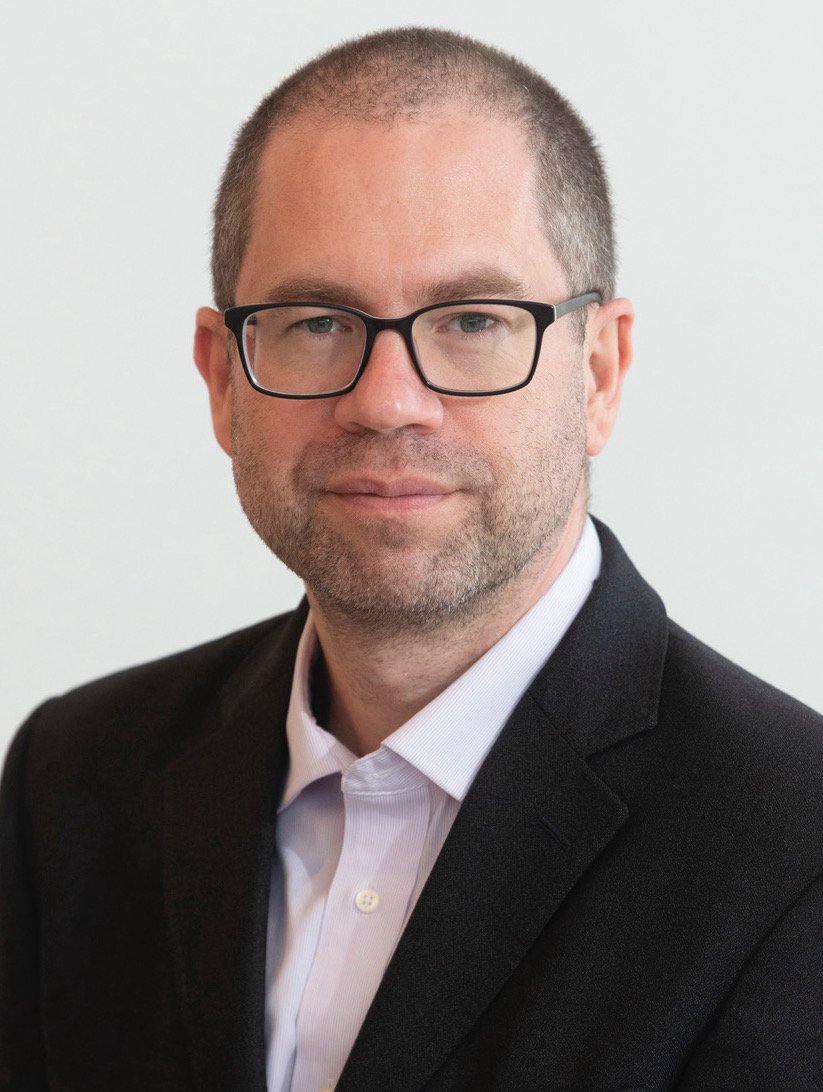
Richard Bell received his PhD from Harvard University and his BA from the University of Cambridge. His research interests focus on American history between 1750 and 1877 and he welcomes enquiries from graduate students working in this period. Visit his website. Download his CV.
Bell’s most recent book is The American Revolution and the Fate of the World. Published by Penguin/Riverhead in 2025, it received starred reviews from Publisher’s Weekly, Library Journal, and Kirkus Reviews. It reveals the full breadth and depth of America’s founding event. The American Revolution was not only the colonies’ triumphant liberation from the rule of an overbearing England; it was also a cataclysm that pulled in participants from around the globe and threw the entire world order into chaos. Repositioning the Revolution at the center of an international web, this narrative ranges as far afield as India, Africa, Central America, and Australia. As Bell's lens widens, the “War of Independence” manifests itself as a sprawling struggle that upended the lives of millions of people on every continent and fundamentally transformed the way the world works, disrupting trade, restructuring penal systems, stirring famine, and creating the first global refugee crisis. Bell conveys the impact of these developments at home and abroad by grounding the narrative in the gripping stories of individuals—including women, minorities, and other disenfranchised people. The result is an unforgettable and unexpected work of American history that shifts everything we thought we knew about our creation story.
Bell’s previous book is Stolen: Five Free Boys Kidnapped Into Slavery and Their Astonishing Odyssey Home. Published by Simon & Schuster in 2019, it was the recipient of the NEH Public Scholar Award and a finalist for the George Washington Prize and the Harriet Tubman Prize. Stolen is the true story of five boys who were kidnapped in the North and smuggled into slavery in the Deep South—and their daring attempt to escape and bring their captors to justice. In Philadelphia in 1825, these five young, free Black boys fell into the clutches of the most fearsome gang of kidnappers and slavers in the United States. Lured onto a small ship with the promise of food and pay, they were instead met with blindfolds, ropes, and knives. Over four long months, their kidnappers drove them overland into the Cotton Kingdom to be sold as slaves. Determined to resist, the boys formed a tight brotherhood as they struggled to free themselves and find their way home. Their ordeal—an odyssey that took them from the Philadelphia waterfront to the marshes of Mississippi and then onward still—shines a glaring spotlight on the Reverse Underground Railroad, a black-market network of human traffickers and slave traders who stole away thousands of legally free African Americans from their families in order to fuel slavery’s rapid expansion in the decades before the Civil War.
Bell has also published two other books. The first, a monograph titled We Shall Be No More: Suicide and Self-Government in the Newly United States, examines the role that discourse regarding self-destruction played in the cultural formation of the early republic. The second work, Buried Lives: Incarcerated in Early America, a co-edited volume of essays centered on the experience of incarcerated subjects and citizens in early America, is the product of a conference organized at the McNeil Center. He is also the author of a dozen book chapters and journal articles.
Bell was recently an Andrew Carnegie Fellow (2021-2023) and has held research fellowships at more than two dozen libraries and institutes. Since coming to College Park in 2006 he has served as the Mellon Fellow in American History at Cambridge University, the National Endowment for the Humanities Fellow at the American Antiquarian Society, a Mayer Fellow at the Huntington Library, a Research Fellow at the Gilder Lehrman Center for the Study of Slavery, Abolition and Resistance at Yale University and as a Resident Fellow at the John W Kluge at the Library of Congress. He is also a frequent lecturer on the C-Span television network and at the Smithsonian Institution.
Bell is the recipient of more than a dozen teaching awards, including the University System of Maryland Board of Regents Faculty Award for Excellence in Teaching, the highest honor for teaching faculty in the Maryland state system. He is also one of the conveners of the Washington Area Early American Seminar, a member of the Board of Trustees of the Maryland Center for History and Culture, an elected member of the Massachusetts Historical Society and the Colonial Society of Massachusetts, and a fellow of the Royal Historical Society. On campus, Bell serves as Chair of the UMD United Kingdom Fellowships Committee and was a founding member of The 1856 Project. He lives in University Park, MD, with his wife and two daughters.
Dr. Sean Wilentz, Princeton University
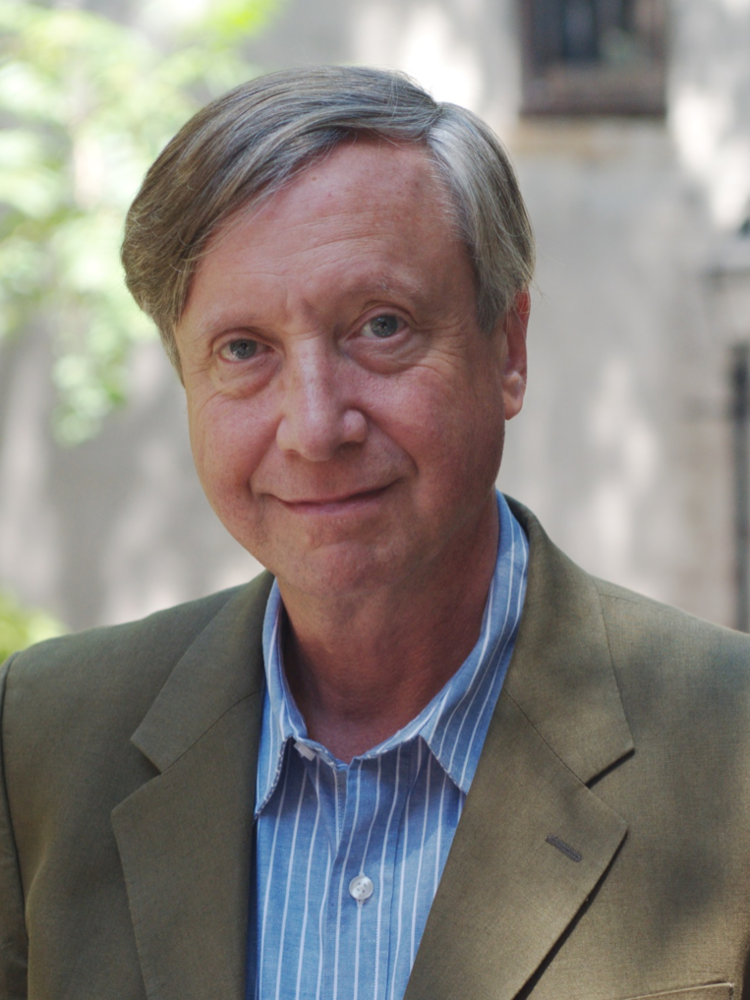
Sean Wilentz studies U.S. political and social history. He received his Ph.D. in history from Yale University (1980) after earning bachelor’s degrees from Columbia University (1972) and Balliol College, Oxford University (1974). Chants Democratic (1984), which won several national prizes, including the Albert J. Beveridge Award of the American Historical Association, shows how the working class emerged in New York City and examines the changes in politics and political thought that came with it. In The Kingdom of Matthias (1994), Professor Wilentz and coauthor Paul E. Johnson tell the story of a bizarre religious cult that sprang up in New York City in the 1830s, exploring in the process the darker corners of the 19th-century religious revival known as the Second Great Awakening. Professor Wilentz is also the coauthor and coeditor of The Key of Liberty (1993) and the editor of several other books, including The Rose and the Briar (2004, Greil Marcus coeditor), a collection of historical essays and artistic creations inspired by American ballads. His The Rise of American Democracy: Jefferson to Lincoln (2005), was awarded the Bancroft Prize and was a finalist for the Pulitzer Prize. Subsequent books include The Age of Reagan: A History, 1974-2008, a reconsideration of U.S. politics since the Watergate affair; Bob Dylan in America, a consideration of Dylan's place in American cultural history; and The Politicians & The Egalitarians: The Hidden History of American Politics, a thematic collection of essays covering American political history from the Revolution through the 1960s. His most recent study, No Property in Man: Slavery and Antislavery at the Nation’s Founding, based on his Nathan I. Huggins Lectures at Harvard, appeared in 2018 and was the recipient of the annual Thomas A. Cooley Book Prize for the best book on the Constitution, awarded by the Georgetown University Law Center. In 2020, the Library of America published the first of three projected volumes of his authoritative edition of the writings of the historian Richard Hofstadter. Professor Wilentz has received numerous fellowships from, among other institutions, the John Simon Guggenheim Foundation, the American Council of Learned Societies, and the American Academy in Berlin. Formerly a contributing editor to The New Republic, and currently a member of the editorial boards of Dissent and Democracy, he lectures frequently and has contributed some four hundred articles, reviews, and op-ed pieces to publications such as the New York Review of Books, the New York Times, the Washington Post, the Los Angeles Times, The Atlantic, the London Review of Books, The American Scholar, The Nation, Le Monde, and Der Spiegel. He has also given congressional testimony, notably before the House Judiciary Committee in 1998. His writings on American music have earned him two Grammy nominations and two Deems Taylor-ASCAP awards.
Dr. Rosemarie Zagarri, George Mason University

Rosemarie Zagarri received her Ph.D. from Yale University and specializes in Early American history. She has published four books, the most recent of which is Revolutionary Backlash: Women and Politics in the Early American Republic (University of Pennsylvania Press, 2007; paperback, 2008). Her articles have appeared in leading scholarly journals such as the Journal of American History, American Quarterly, Journal of the Early Republic, and William & Mary Quarterly, and in numerous edited collections.Her latest book project is called, "Intimacies and Ambitions: Thomas Law in British India and the Early American Republic."
Professor Zagarri has received numerous nationally competitive research fellowships from scholarly organizations such as the National Endowment for the Humanities (1997-1998, 2011-2012), the American Antiquarian Society, the American Philosophical Society, and George Washington's Mount Vernon. Her article, “Morals, Manners, and the Republican Mother,” published in American Quarterly, received the Outstanding Article Prize from the Southeastern Eighteenth-Century Studies Association. The Wall Street Journal named her book, A Woman's Dilemma: Mercy Otis Warren and the American Revolution, one of the "Five Best Book on Revolutionary Women." She was the Thomas Jefferson Chair in American Studies at the University of Amsterdam, The Netherlands, and has served on the editorial boards of American Quarterly, Journal of the Early Republic, William & Mary Quarterly, and the University of Virginia Press. In 2010, she was elected President of the Society for Historians of the Early American Republic (SHEAR). In 2023, she was elected as a Fellow of the Society of American Historians. A past recipient of the Scholarship Award given by Mason's College of Humanities and Social Sciences, in 2013 the GMU Board of Visitors named her a Distinguished University Professor, the highest faculty rank at the university.